
In May, we held our national convening for place-based giving where practitioners, policymakers, residents and businesses came from across the UK to explore one question: what does it take to create lasting change in communities and are we funding it?
Barking & Dagenham Giving share their experience of what place-based giving means for them.
Money is a catalyst. Relationships are the infrastructure.
By Géraud de Ville de Goyet, CEO Barking & Dagenham Giving
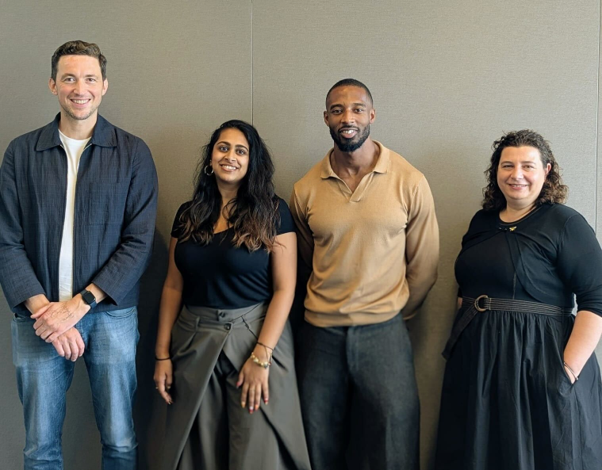
Recently, I had the opportunity to speak at Funders Together's national convening for place-based giving alongside three brilliant community leaders from Barking and Dagenham: Bhav, AJ and Lili.
We were asked to take part in a panel on the question: what is place based giving?
As a movement of schemes we say place based giving "brings local people, businesses, and organisations together to transform neighbourhoods. It's rooted in the belief that everyone has something to give – time, skills, or money – and by pooling these resources, schemes help residents turn local aspirations into action."
We chose to answer that question by sharing our experience of what it means, what it feels like and how it’s different from other forms of giving.
How is it different?
People often assume that funders exist to move money around. To some extent, that's true. Money matters because it can unlock opportunities, support local organisations and help ideas become reality.
But after years of working alongside residents in Barking and Dagenham, I've come to believe that money is only part of the story. Relationships are the infrastructure that makes the money work for a community.
So, during the session we talked about what happens when local people are not included in funding decisions that affect them.
Lili told us: “You start seeing your place as somewhere things happen to you. Decisions feel distant. Plans get announced. Funding comes and goes. And people get used to hearing what’s wrong with a place.”
But every community contains an extraordinary amount of insight, creativity and ambition. That’s a starting point for place-based giving: people closest to local challenges are also closest to the solutions.
And when you understand that, you also understand that place based giving is about power.
More than participation
At BD Giving, we have learned that meaningful participation is not simply asking for opinions, it is sharing power at every level of the organisation (from governance to grants).
-
Lili (and others) helped shape our investment policy and the design of our GROW Fund for local entrepreneurs.
- Bhav is part of Spaces + Places, a resident-led process that is deciding how significant investment in community assets should be used. Through conversations with neighbours, a shared ambition emerged around creating opportunities for young people. That thinking is now helping to shape plans for a new multipurpose hub in Barking and Dagenham.
- AJ has helped build stronger connections between local creatives, the council and community organisations through the borough's cultural development work.
This is not consultation. These are examples of people helping to shape decisions that affect the future of the place they live. When that happens, people do not simply change their communities, they change their relationship with their communities.
The politics of money
Preparing for the conference led me to revisit the work of anthropologist David Graeber.
In Debt: The First 5,000 Years, Graeber challenges the idea that money is a neutral tool. He argues that money has always been connected to human relationships, obligations and social arrangements.
The way resources are created, distributed and controlled shapes the relationships that exist around them. When funding decisions are centralised and distant, money can reinforce hierarchy and inequality. When communities have genuine influence over how resources are used, money can strengthen trust, shared responsibility and collective action.
In other words, the question is not simply how much money is distributed. The question is how that money moves, who decides, and what kinds of relationships it creates along the way.
A joyful web of connections
At the conference, we used a slightly chaotic but effective metaphor involving a ball of string. As we passed the string between us, a web gradually formed linking each of us to the person before and the person who came next.
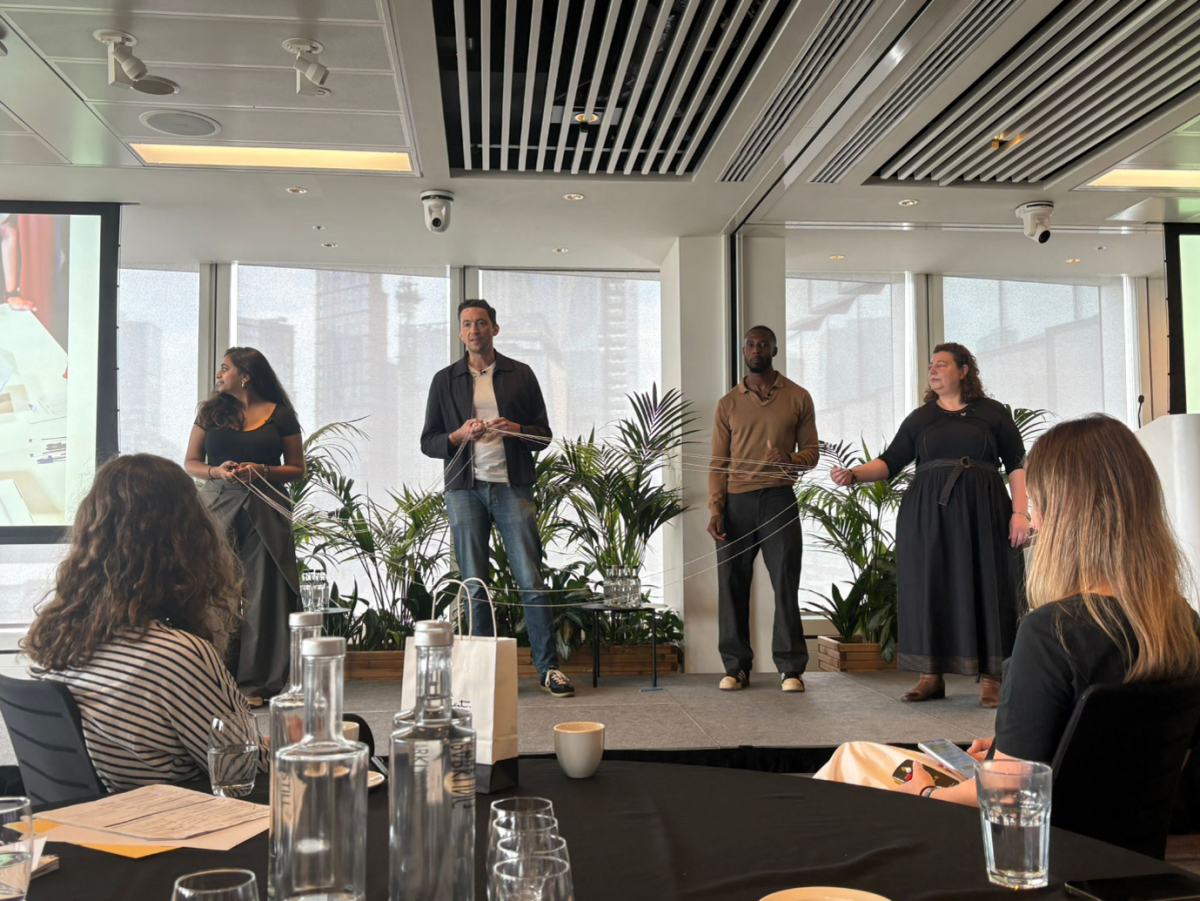
The resulting tapestry showed that change doesn’t happen if money yo yos, from funder to recipient.
It happens through connections:
- One conversation leads to another,
- one project connects to another,
- one person brings in another - or more.
That’s how stronger communities are built. Over time, these connections become stronger and more resilient. They create the social fabric that helps communities respond to challenges and make the most of opportunities.
That’s why place-based giving is not simply a new way of talking about funding. It’s a deliberate approach to building the relationships that weave our communities together.
Why this matters
When communities collectively decide how to allocate resources, money becomes a means to deepen trust, mutual responsibility, and shared purpose.
There is also a flip side to this: money used in hierarchical, extractive ways weakens social fabric. To summarise Graeber:
Money when used intentionally within participatory frameworks, is not just a practical tool but a moral and social imperative. It is a means to restore the kinds of relationships that have historically made communities resilient, and to counter the divisive effects of money used as a tool of control.
This is the promise of place-based giving: a deliberate choice to strengthen social fabric.
And recognising that the strongest communities are built not only through investment, but through the web of human connections that investment makes possible.
About Barking & Dagenham Giving
BD Giving is a community-led funder and social investor. We create opportunities for local people to make decisions about how money is spent in Barking and Dagenham.
Using proven participatory methods, we put money into the hands of the people who know Barking and Dagenham best. Local people decide where money goes and how it’s used. We support them to do this in a way that builds confidence, trust and connections.
Barking and Dagenham is home to creativity, enterprise and ambition. But it’s been through a lot – rapid change, deep inequality, and decades of underinvestment.
BD Giving harnesses local energy to change how funding decisions are made. We started by giving residents control over emergency pandemic funding. Then we recruited 12 local people to develop a pioneering investment fund, currently valued at over £2 million. Today, alongside residents, we’re funding new ideas, investing in local enterprise, developing social infrastructure and shaping community spaces.
Everything we do is rooted in the belief that the people affected by funding decisions should be the ones making them. That’s how we create a fairer system – where resources are distributed with care and long-term vision.
This is bigger than funding. It’s about changing how money works in communities, and who it works for.